

UNIQUE PLANT RENTALS
Plant Rentals That Transform
Whether it's a corporate event, wedding, conference, or any other gathering, make a statement with unique, fully-grown potted plants delivered directly from our greenhouse.
Searching for that extra touch to transform your event?
Look no further. At The ZEN Succulent, we specialize in providing a plant rental service that's designed to amaze your guests, enhance your decor, and infuse your surroundings with vibrant living greenery.

WIDE VARIETY OF LIVE PLANTS
Our collection features an array of options, from the lush beauty of live tropical plants to the charming allure of succulents and cacti. With sizes ranging from tabletop companions to grand floor plants, we cater to every corner of your event space. Let us curate the perfect greenery ensemble for your occasion, ensuring a visually stunning and inviting atmosphere.
DESIGNER RECOMMENDATIONS
We understand that every detail matters when it comes to creating a truly captivating event. That's why all our rented plants are thoughtfully presented in decorative planters of your choice, tailored to seamlessly align with the event's style. Our designer recommendations ensure that your chosen planters perfectly complement the decor or natural surroundings, ensuring a cohesive and stunning aesthetic.

SERVING RALEIGH, DURHAM, CHAPEL HILL + BEYOND
Starting at just $500, our multi-plant, two-day plant rental package is a gateway to transform your space into a green oasis. For your convenience, we maintain a minimum order size of 3 to 10 plants, which varies according to the size of plants you choose. Based in the Raleigh, Durham, Chapel Hill, and surrounding areas, we extend our services to bring the beauty of nature to your doorstep.
And here's the best part – all our prices include installation, delivery, and pick-up within our designated delivery area, making the process hassle-free and seamless for you.
Start Your Plant Rental Order
Step 1: Browse Plants
Customer Favorites —Handpicked Selections from Our Latest Plant Rental Collection

Say hello to the Pink Quill Plant—a vibrant, easy-care houseplant that’s sure to brighten any room. Known for its signature pink, feather-like bract (that’s the “quill”) and lush green leaves, this Wallisia cyanea is both eye-catching and effortless to care for. As a member of the bromeliad family, it even grows a tiny air plant at its base, adding a fun twist to its already unique look.
Botanical Name: Wallisia cyanea
Common Names: Pink Quill Plant, Bromeliad Tillandsia, Cyanea Pink Quill
This plant ships fully bloomed, with colors as vivid as the photo—so no waiting around for those cheerful hues! Native to the rainforests of Ecuador, the Pink Quill thrives indoors and is as tough as it is beautiful, making it a perfect plant for beginners or anyone looking to add a pop of color to their space. Whether you're gifting it to a friend or adding it to your own plant collection, the Pink Quill brings a bold, tropical flair without demanding too much attention.
CARE GUIDE:
Light. The Pink Quill loves bright, indirect light. A spot near a sunny window is perfect, but avoid direct sunlight—it can fade that gorgeous pink bract. It can tolerate lower light, but the bloom may last longer with more light.
Water. Keep the soil lightly moist, but never soggy. Water when the top inch feels dry, and don’t forget—this bromeliad loves a little water in its central “cup” (the base of the pink bract). Be sure to empty and refresh it regularly to prevent standing water.
Humidity. The Pink Quill thrives in moderate to high humidity, but it will do just fine in average home conditions. If your space is on the dry side, a light misting or nearby humidifier can help keep it happy and vibrant.
Toxicity. Good news—Wallisia cyanea is non-toxic to pets and humans, making it a safe and cheerful addition to any home.

Fall in love with the Hoya Sweetheart Variegated—a charming little houseplant known for its thick, heart-shaped leaves with a playful splash of yellow variegation. Often called the wax plant thanks to its glossy, succulent-like foliage, this beauty brings a touch of warmth and whimsy to any space.
Botanical Name: Hoya kerrii
Common Names: Sweetheart Plant, Lucky-Heart
Native to the tropics of Asia, this plant loves a cozy, sunny spot and thrives in warm conditions. While it's a slow grower (this single-leaf cutting likes to take its time), it's also incredibly hardy and low-maintenance—perfect for anyone looking for a no-fuss green companion. Whether you're gifting it as a symbol of love or adding it to your own collection, the Hoya Sweetheart is more of a delightful decorative piece than a demanding houseplant.
CARE GUIDE:
Light. Your Hoya Sweetheart loves bright, indirect light. A sunny windowsill with filtered light is perfect. Too much direct sunlight can scorch the leaves, while too little light will slow its already leisurely growth even more.
Water. Let the soil dry out between waterings. This plant is drought-tolerant and prefers a light touch when it comes to watering. Overwatering can lead to root rot, so when in doubt, it’s better to wait a bit longer.
Humidity. Average home humidity suits the Hoya Sweetheart just fine, but it won’t say no to a little extra moisture in the air. If your home is on the dry side, occasional misting or placing it near a humidifier can help keep it happy.
Toxicity.Good news! The Hoya Sweetheart is non-toxic to pets and humans, making it a safe, heartwarming addition to any home. However, it's always a good idea to keep plants out of reach of curious pets and little ones.

Fall in love with the Hoya Sweetheart —a charming little houseplant known for its thick, heart-shaped leaves with a playful splash of yellow variegation. Often called the wax plant thanks to its glossy, succulent-like foliage, this beauty brings a touch of warmth and whimsy to any space.
Botanical Name: Hoya kerrii
Common Names: Sweetheart Plant, Lucky-Heart
Native to the tropics of Asia, this plant loves a cozy, sunny spot and thrives in warm conditions. While it's a slow grower (this single-leaf cutting likes to take its time), it's also incredibly hardy and low-maintenance—perfect for anyone looking for a no-fuss green companion. Whether you're gifting it as a symbol of love or adding it to your own collection, the Hoya Sweetheart is more of a delightful decorative piece than a demanding houseplant.
CARE GUIDE:
Light. Your Hoya Sweetheart loves bright, indirect light. A sunny windowsill with filtered light is perfect. Too much direct sunlight can scorch the leaves, while too little light will slow its already leisurely growth even more.
Water. Let the soil dry out between waterings. This plant is drought-tolerant and prefers a light touch when it comes to watering. Overwatering can lead to root rot, so when in doubt, it’s better to wait a bit longer.
Humidity. Average home humidity suits the Hoya Sweetheart just fine, but it won’t say no to a little extra moisture in the air. If your home is on the dry side, occasional misting or placing it near a humidifier can help keep it happy.
Toxicity.Good news! The Hoya Sweetheart is non-toxic to pets and humans, making it a safe, heartwarming addition to any home. However, it's always a good idea to keep plants out of reach of curious pets and little ones.

Pothos ‘Green Queen’ Houseplant — is a regal beauty with cascading vines adorned in lush, heart-shaped leaves, creating a majestic green curtain for your space. Its vibrant emerald hues and trailing tendrils add a touch of royalty to any room, making it a queen among houseplants. Care for this majestic green companion is a breeze – just keep it in bright, indirect light, water when the top inch of soil feels dry, and watch it thrive.
Botanical Classification: Epipremnum aureum
Common Name: Green Queen, Green Queen Pothos, Pothos
CARE GUIDE:
Light.This pothos is adaptable to various light levels, accelerating growth in brighter conditions. When transitioning from indirect to direct light, it's recommended to acclimate the plant gradually over a few weeks to prevent foliage scorching.
Water.Only water the plant when the soil is completely dry, leaning towards a drier approach. Ensure thorough watering to promote a robust root system, and remove any surplus water collected in the saucer.
Humidity. Your pothos thrives in a slightly increased humidity setting, making spaces like bathrooms or kitchens an excellent choice. Keep an eye out for brown leaf tips, as they may signal that the air is too dry for your plant's liking.
Toxicity. Toxic to pets and humans.
Additional Care. Feel empowered to trim your Jade Pothos regularly. Remove any dead, discolored, damaged, or diseased leaves and stems as they appear. To ensure a neat cut, use clean and sharp scissors, snipping stems just above a leaf node. This method encourages new growth to emerge from the cut, keeping your plant vibrant and healthy.

Pothos ‘Global Green’ Houseplant — is like a vibrant cascade of green happiness! With heart-shaped leaves that boast a rich, variegated pattern, it adds an instant touch of nature to any room. Easy-breezy care – just keep it in bright, indirect light, give it a sip when the soil feels dry, and watch this beauty flourish into a stunning, low-maintenance companion.
Botanical Classification: Epipremnum aureum 'Global Green'
Common Name: Global Green, Global Green Pothos, Pothos
CARE GUIDE:
Light.This pothos is adaptable to various light levels, accelerating growth in brighter conditions. When transitioning from indirect to direct light, it's recommended to acclimate the plant gradually over a few weeks to prevent foliage scorching.
Water.Only water the plant when the soil is completely dry, leaning towards a drier approach. Ensure thorough watering to promote a robust root system, and remove any surplus water collected in the saucer.
Humidity. Your pothos thrives in a slightly increased humidity setting, making spaces like bathrooms or kitchens an excellent choice. Keep an eye out for brown leaf tips, as they may signal that the air is too dry for your plant's liking.
Toxicity. Toxic to pets and humans.
Additional Care. Feel empowered to trim your Jade Pothos regularly. Remove any dead, discolored, damaged, or diseased leaves and stems as they appear. To ensure a neat cut, use clean and sharp scissors, snipping stems just above a leaf node. This method encourages new growth to emerge from the cut, keeping your plant vibrant and healthy.

Pothos ‘Jade Satin’ Houseplant —a lush beauty with heart-shaped leaves that shimmer in a satin-like finish, adding a touch of elegance to your space. This low-maintenance houseplant is not just a looker; it's a breeze to care for! Keep it happy with indirect light, a sip of water when the top inch of soil feels dry, and occasional praises for being the stylish green companion it is.
Botanical Classification: Scindapsus pictus
Common Name: Jade Satin Pothos, Pothos
CARE GUIDE:
Light.This pothos is adaptable to various light levels, accelerating growth in brighter conditions. When transitioning from indirect to direct light, it's recommended to acclimate the plant gradually over a few weeks to prevent foliage scorching.
Water.Only water the plant when the soil is completely dry, leaning towards a drier approach. Ensure thorough watering to promote a robust root system, and remove any surplus water collected in the saucer.
Humidity. Your pothos thrives in a slightly increased humidity setting, making spaces like bathrooms or kitchens an excellent choice. Keep an eye out for brown leaf tips, as they may signal that the air is too dry for your plant's liking.
Toxicity. Toxic to pets and humans.
Additional Care. Feel empowered to trim your Jade Pothos regularly. Remove any dead, discolored, damaged, or diseased leaves and stems as they appear. To ensure a neat cut, use clean and sharp scissors, snipping stems just above a leaf node. This method encourages new growth to emerge from the cut, keeping your plant vibrant and healthy.

Pothos 'Cebu Blue' Houseplant — a stunning houseplant with heart-shaped leaves featuring a unique bluish-green hue, making it a standout addition to your indoor jungle. This beauty thrives in low to bright indirect light, and its trailing vines add an elegant touch to any space. Water when the top inch of soil is dry, and you'll have a resilient and gorgeous companion that'll bring joy to your home!
Botanical Classification: Epipremnum aureum
Common Name: Cebu Blue, Blue Pothos, Pothos
CARE GUIDE:
Light.This pothos is adaptable to various light levels, accelerating growth in brighter conditions. When transitioning from indirect to direct light, it's recommended to acclimate the plant gradually over a few weeks to prevent foliage scorching.
Water.Only water the plant when the soil is completely dry, leaning towards a drier approach. Ensure thorough watering to promote a robust root system, and remove any surplus water collected in the saucer.
Humidity. Your pothos thrives in a slightly increased humidity setting, making spaces like bathrooms or kitchens an excellent choice. Keep an eye out for brown leaf tips, as they may signal that the air is too dry for your plant's liking.
Toxicity. Toxic to pets and humans.
Additional Care. Feel empowered to trim your Jade Pothos regularly. Remove any dead, discolored, damaged, or diseased leaves and stems as they appear. To ensure a neat cut, use clean and sharp scissors, snipping stems just above a leaf node. This method encourages new growth to emerge from the cut, keeping your plant vibrant and healthy.
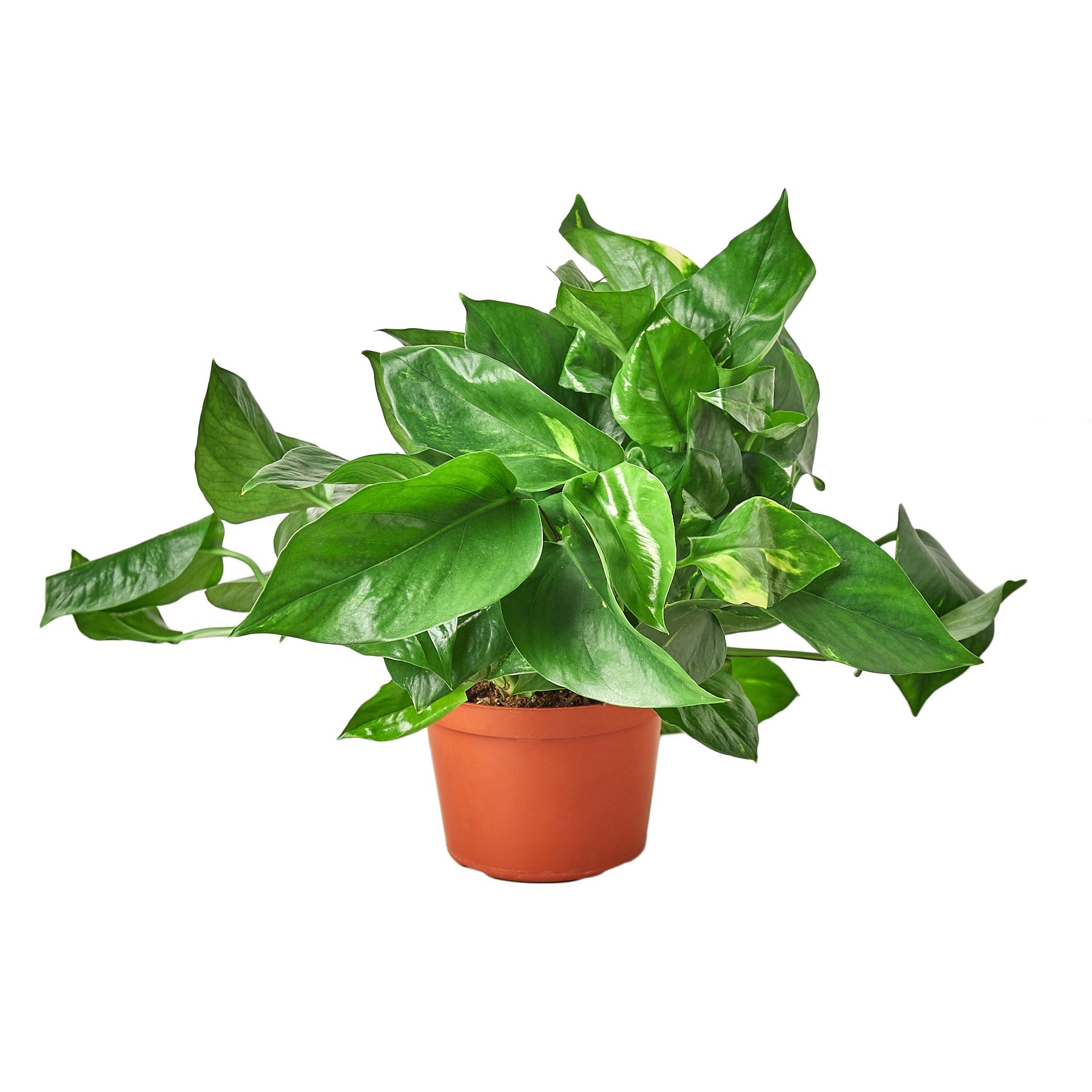
Pothos ‘Golden’ Houseplant — a lush, trailing beauty with heart-shaped leaves in vibrant shades of green and gold, adding a touch of natural elegance to any space. This low-maintenance charmer thrives on neglect, making it perfect for both beginners and busy plant parents. Just place it in bright, indirect light, water when the top inch of soil feels dry, and watch it gracefully cascade, turning your home into a cozy green haven.
Botanical Classification: Epipremnum aureum
Common Name: Golden, Golden Pothos, Pothos
CARE GUIDE:
Light.This pothos is adaptable to various light levels, accelerating growth in brighter conditions. When transitioning from indirect to direct light, it's recommended to acclimate the plant gradually over a few weeks to prevent foliage scorching.
Water.Only water the plant when the soil is completely dry, leaning towards a drier approach. Ensure thorough watering to promote a robust root system, and remove any surplus water collected in the saucer.
Humidity. Your pothos thrives in a slightly increased humidity setting, making spaces like bathrooms or kitchens an excellent choice. Keep an eye out for brown leaf tips, as they may signal that the air is too dry for your plant's liking.
Toxicity. Toxic to pets and humans.
Additional Care. Feel empowered to trim your Jade Pothos regularly. Remove any dead, discolored, damaged, or diseased leaves and stems as they appear. To ensure a neat cut, use clean and sharp scissors, snipping stems just above a leaf node. This method encourages new growth to emerge from the cut, keeping your plant vibrant and healthy.

Pothos ‘Neon’ Houseplant — the rockstar of houseplants, flaunting vibrant lime-green leaves that practically glow in any room. This easygoing beauty thrives on neglect – low light? No problem! Forgetful waterer? It's cool! Just water it when the top inch of soil feels dry, and let its cascading vines bring a pop of lively energy to your space. The Neon Pothos is not just a plant; it's a low-maintenance, high-vibe roommate ready to elevate your home with its radiant personality!
Botanical Classification: Epipremnum aureum 'Neon'
Common Name: Neon pothos, neon plant, Pothos
CARE GUIDE:
Light.This pothos is adaptable to various light levels, accelerating growth in brighter conditions. When transitioning from indirect to direct light, it's recommended to acclimate the plant gradually over a few weeks to prevent foliage scorching.
Water.Only water the plant when the soil is completely dry, leaning towards a drier approach. Ensure thorough watering to promote a robust root system, and remove any surplus water collected in the saucer.
Humidity. Your pothos thrives in a slightly increased humidity setting, making spaces like bathrooms or kitchens an excellent choice. Keep an eye out for brown leaf tips, as they may signal that the air is too dry for your plant's liking.
Toxicity. Toxic to pets and humans.
Additional Care. Feel empowered to trim your Jade Pothos regularly. Remove any dead, discolored, damaged, or diseased leaves and stems as they appear. To ensure a neat cut, use clean and sharp scissors, snipping stems just above a leaf node. This method encourages new growth to emerge from the cut, keeping your plant vibrant and healthy.

Pothos ‘Marble Queen’ Houseplant — a stunner in the houseplant world! With heart-shaped leaves splashed in creamy whites and greens, it's like Mother Nature grabbed a paintbrush and went to town. Super easy-going, this beauty thrives in moderate light, enjoys a sip of water when the top inch of soil feels dry, and is ready to turn any corner of your home into a lush, vibrant oasis.
Botanical Classification: Epipremnum aureum 'Marble Queen'
Common Name:Marble, Marble Queen, Pothos
CARE GUIDE:
Light.This pothos is adaptable to various light levels, accelerating growth in brighter conditions. When transitioning from indirect to direct light, it's recommended to acclimate the plant gradually over a few weeks to prevent foliage scorching.
Water.Only water the plant when the soil is completely dry, leaning towards a drier approach. Ensure thorough watering to promote a robust root system, and remove any surplus water collected in the saucer.
Humidity. Your pothos thrives in a slightly increased humidity setting, making spaces like bathrooms or kitchens an excellent choice. Keep an eye out for brown leaf tips, as they may signal that the air is too dry for your plant's liking.
Toxicity. Toxic to pets and humans.
Additional Care. Feel empowered to trim your Jade Pothos regularly. Remove any dead, discolored, damaged, or diseased leaves and stems as they appear. To ensure a neat cut, use clean and sharp scissors, snipping stems just above a leaf node. This method encourages new growth to emerge from the cut, keeping your plant vibrant and healthy.
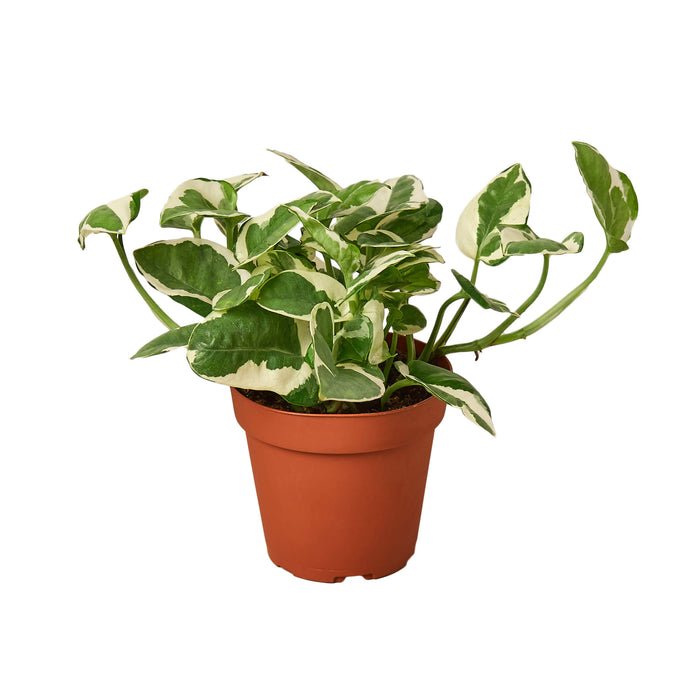
Pothos ‘N’Joy’ Houseplant — a charming houseplant with heart-shaped leaves splashed in green and white. It's like having a burst of joy in a pot! Easy to care for, this beauty thrives in medium to low light, and you can water it when the top inch of soil feels dry. Just let it do its thing and watch your space light up with a touch of green happiness!
Botanical Classification: Epipremnum pinnatum 'Njoy'
Common Name: N’ Joy, N’Joy Pothos, Pothos
CARE GUIDE:
Light.This pothos is adaptable to various light levels, accelerating growth in brighter conditions. When transitioning from indirect to direct light, it's recommended to acclimate the plant gradually over a few weeks to prevent foliage scorching.
Water.Only water the plant when the soil is completely dry, leaning towards a drier approach. Ensure thorough watering to promote a robust root system, and remove any surplus water collected in the saucer.
Humidity. Your pothos thrives in a slightly increased humidity setting, making spaces like bathrooms or kitchens an excellent choice. Keep an eye out for brown leaf tips, as they may signal that the air is too dry for your plant's liking.
Toxicity. Toxic to pets and humans.
Additional Care. Feel empowered to trim your Jade Pothos regularly. Remove any dead, discolored, damaged, or diseased leaves and stems as they appear. To ensure a neat cut, use clean and sharp scissors, snipping stems just above a leaf node. This method encourages new growth to emerge from the cut, keeping your plant vibrant and healthy.
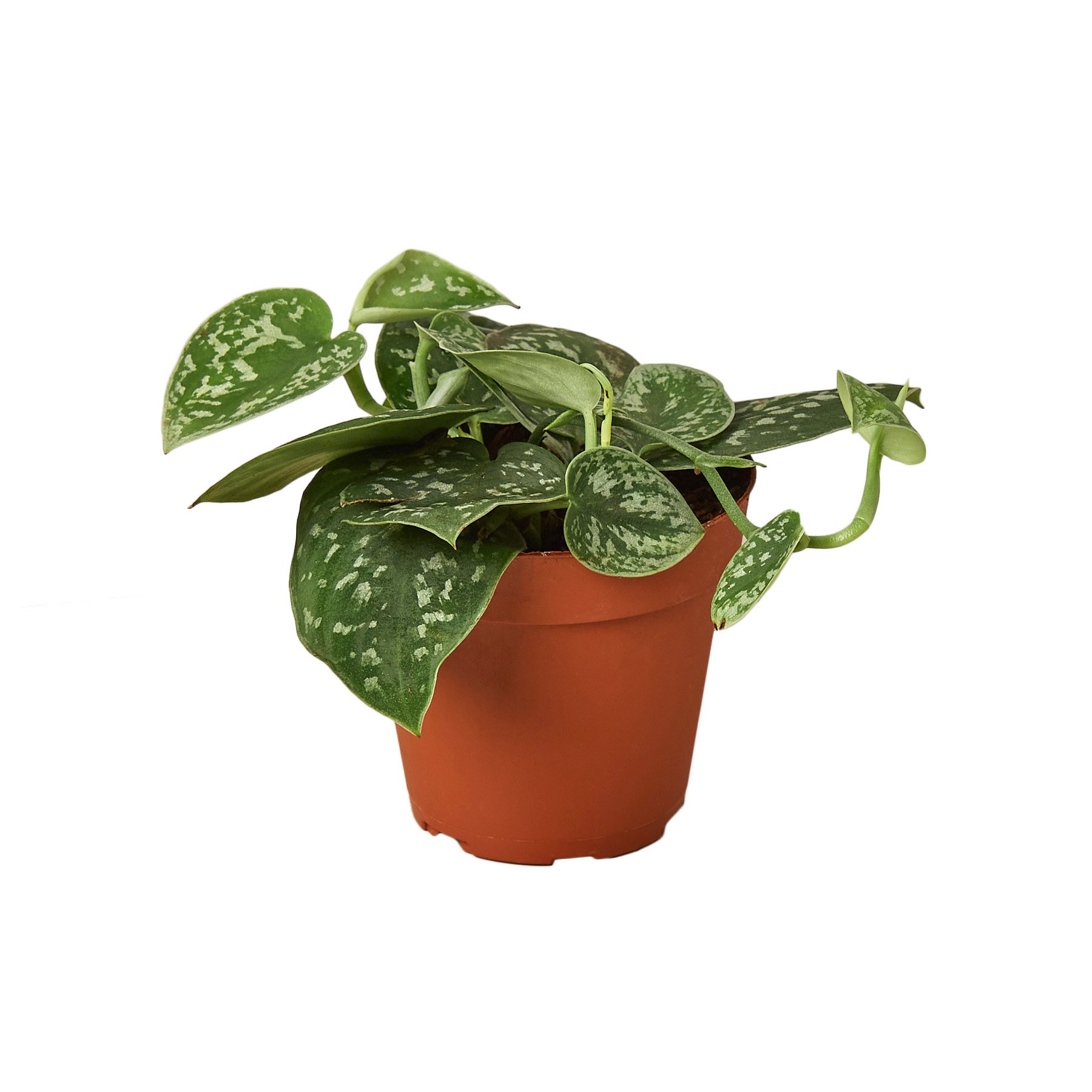
Pothos ‘Satin’ Houseplant — a true green beauty, boasts heart-shaped leaves with a glossy sheen that feels as luxurious as it looks. It's a resilient houseplant, thriving in low to bright, indirect light – making it the perfect companion for any room. Just keep its soil consistently moist but not soggy, and you'll have a stunning Satin Pothos gracing your space
Botanical Classification: Scindapsus pictus
Common Name: Satin Pothos, Pothos
CARE GUIDE:
Light.This pothos is adaptable to various light levels, accelerating growth in brighter conditions. When transitioning from indirect to direct light, it's recommended to acclimate the plant gradually over a few weeks to prevent foliage scorching.
Water.Only water the plant when the soil is completely dry, leaning towards a drier approach. Ensure thorough watering to promote a robust root system, and remove any surplus water collected in the saucer.
Humidity. Your pothos thrives in a slightly increased humidity setting, making spaces like bathrooms or kitchens an excellent choice. Keep an eye out for brown leaf tips, as they may signal that the air is too dry for your plant's liking.
Toxicity. Toxic to pets and humans.
Additional Care. Feel empowered to trim your Jade Pothos regularly. Remove any dead, discolored, damaged, or diseased leaves and stems as they appear. To ensure a neat cut, use clean and sharp scissors, snipping stems just above a leaf node. This method encourages new growth to emerge from the cut, keeping your plant vibrant and healthy.
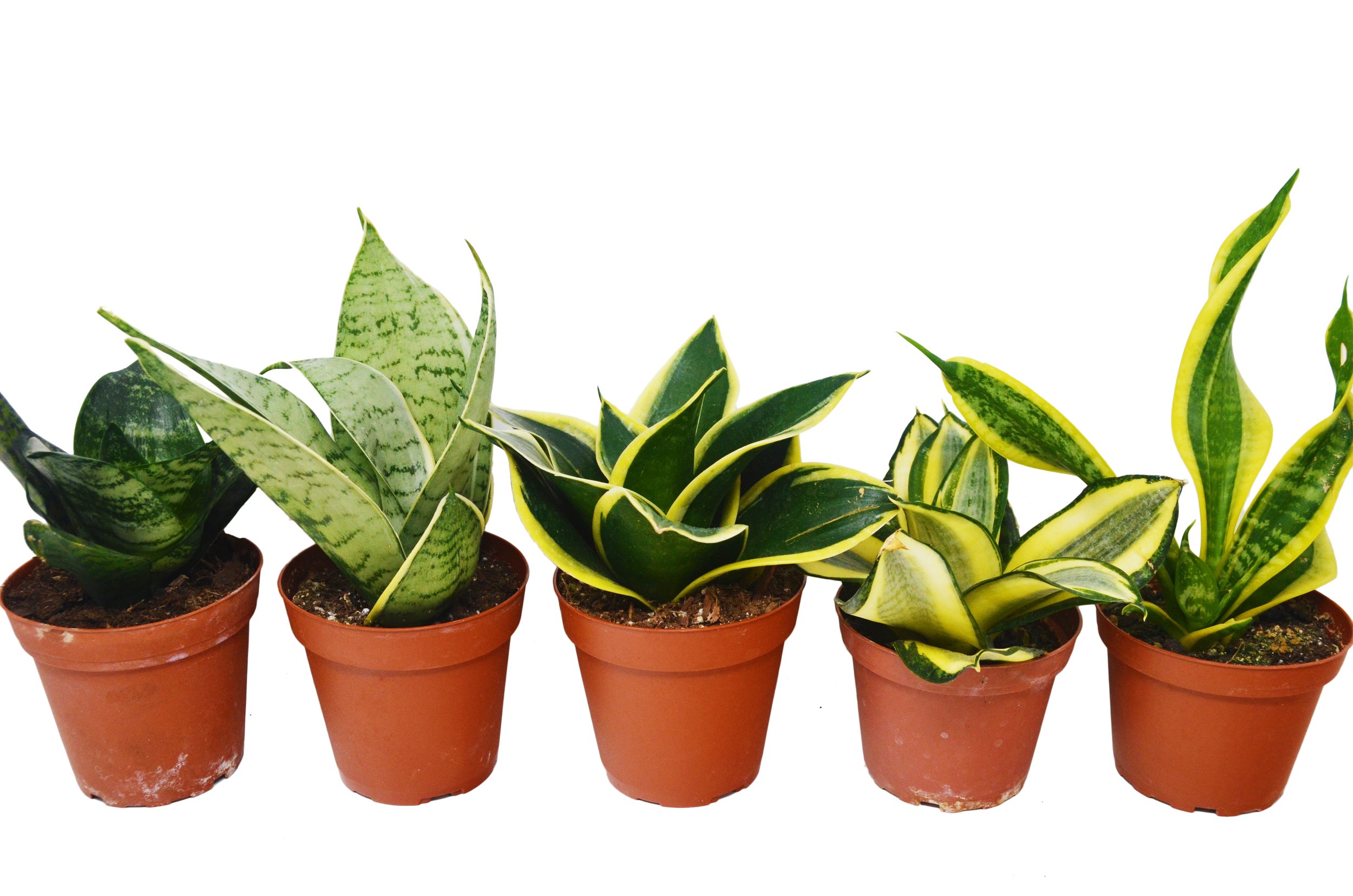
Sansevieria 'Starpower' Houseplant — boasts striking variegated leaves with vibrant yellow margins, creating a visually appealing and resilient houseplant. With its low-maintenance nature, this plant thrives in indirect light and is an ideal choice to place in low-light areas, making it a versatile and stylish addition to any home.
Botanical Classification: Sansevieria
Common Name: Snake plant, Zeylanica, Mother-in-law's tongue
** You'll get a single (1) bromeliad plant from our collection – it may be one you've seen in-store or a delightful new variety not yet pictured. Excitement guaranteed! **
CARE GUIDE:
Light.The Snake Plant is adaptable to various light levels, with growth accelerating in brighter conditions. When transitioning from indirect to direct light, it's recommended to acclimate the plant gradually over a few weeks to prevent foliage scorching.
Water.Only water the plant when the soil is completely dry, leaning towards a drier approach. Ensure thorough watering to promote a robust root system, and remove any surplus water collected in the saucer.
Humidity. The Sansevieria thrives in a dry environment and doesn't require misting.
Toxicity. Toxic to pets and humans.
Additional Care. Snake Plants reproduce by growing new plants (or ‘‘pups’’) near the base of the mother plant. To propagate your Snake Plant, carefully remove the leaves and stems of each pup once they become a few inches tall and plant them into a new pot.

Bromeliad Assorted Variety Single Houseplant — an energizing-looking plant with long-lasting bright spikes and arching green leaves that thrive in bright light and humidity!
** You'll get a single (1) bromeliad plant from our collection – it may be one you've seen in-store or a delightful new variety not yet pictured. Excitement guaranteed! **
CARE GUIDE:
Light. bright, indirect light
Water. Allow the soil to stay moist but never damp, watering if the soil is completely dry —you can water the truck of the plant to keep it as hydrated as possible.
Humidity. Loves its leaves misted. Mist the leaves to increase humidity around your plant, especially in the drier winter months.
Toxicity. Non-toxic and pet-friendly.
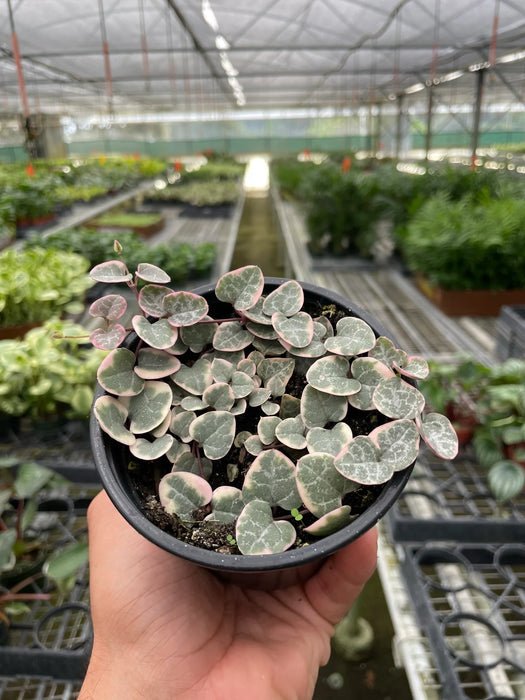
String of Hearts Variegated Succulent Plant — its elegant trailing vines adorned with variegated heart-shaped leaves, this succulent not only adds a distinctive charm to your space but also thrives as an excellent low-maintenance houseplant, bringing beauty and simplicity to your indoor environment.
Botanical Classification: Ceropegia woodii
Common Name: String of Heart Variegated
CARE GUIDE:
Light. Indirect light to bright light — While it flourishes in direct sunlight, it won't tolerate a permanent placement away from a window. Aim for at least 4-6 hours of sunshine for optimal growth.
Water. careful of overwatering— this plant can go up to 3-4 weeks without water. When you water, make sure to water deeply and allow the soil to dry out.
Humidity. No humidity needed
Toxicity. Toxic and not pet-friendly.

Rat Tail Cactus Plant — stands out with its long, trailing stems and vibrant pink or red flowers. Its unique appearance and minimal care requirements make it an excellent choice as a houseplant, adding a distinctive and visually striking element to any indoor space.
Botanical Classification: Huernia insigniflora
Common Name: Rat Tail Cactus
CARE GUIDE:
Light. Indirect light to bright light — While it flourishes in direct sunlight, it won't tolerate a permanent placement away from a window. Aim for at least 4-6 hours of sunshine for optimal growth.
Water. careful of overwatering— this plant can go up to 3-4 weeks without water. When you water, make sure to water deeply and allow the soil to dry out.
Humidity. No humidity needed
Toxicity. Toxic and not pet-friendly.

Jade Crassula Succulent Plant — with its thick, lustrous leaves and sturdy branches, brings a unique, tree-like aesthetic to any indoor setting.
Botanical Classification: Crassula
Common Name: Jade Succulent
CARE GUIDE:
Light. Indirect light to bright light — While it flourishes in direct sunlight, it won't tolerate a permanent placement away from a window. Aim for at least 4-6 hours of sunshine for optimal growth.
Water. careful of overwatering— this plant can go up to 3-4 weeks without water. When you water, make sure to water deeply and allow the soil to dry out.
Humidity. No humidity needed
Toxicity. Toxic and not pet-friendly.

String of Bananas Succulent Plant — Its trailing vines adorned with cascading banana-shaped leaves not only make it a distinctive and eye-catching addition to your indoor space but also contribute to its easy-care nature, making it an excellent and visually appealing houseplant.
Botanical Classification: Senecio radicans
Common Name: String of Bananas
CARE GUIDE:
Light. Indirect light to bright light — While it flourishes in direct sunlight, it won't tolerate a permanent placement away from a window. Aim for at least 4-6 hours of sunshine for optimal growth.
Water. careful of overwatering— this plant can go up to 3-4 weeks without water. When you water, make sure to water deeply and allow the soil to dry out.
Humidity. No humidity needed
Toxicity. Toxic and not pet-friendly.
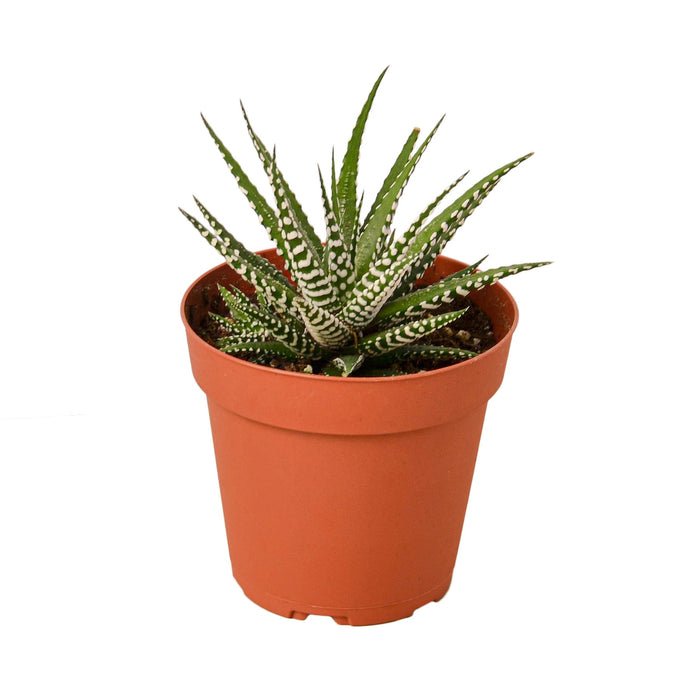
Zebra Haworthia Succulent Plant — distinguished by its striking striped leaves and rosette shape, adds an eye-catching, sculptural element to any indoor space. Its resilience and low maintenance needs make it an excellent houseplant, thriving in indirect light and requiring minimal watering, ideal for both seasoned plant enthusiasts and beginners alike.
Botanical Classification: Haworthiopsis attenuata
Common Name: Zebra Succulent, Haworthia
CARE GUIDE:
Light. Indirect light to bright light — While it flourishes in direct sunlight, it won't tolerate a permanent placement away from a window. Aim for at least 4-6 hours of sunshine for optimal growth.
Water. careful of overwatering— this plant can go up to 3-4 weeks without water. When you water, make sure to water deeply and allow the soil to dry out.
Humidity. No humidity needed
Toxicity. Toxic and not pet-friendly.

String of Hearts Succulent Plant — Its cascading vines adorned with charming heart-shaped leaves make it a visually stunning and low-maintenance houseplant, perfect for adding a touch of green elegance to any indoor space.
Botanical Classification: Ceropegia woodii
Common Name: String of Hearts
CARE GUIDE:
Light. Indirect light to bright light — While it flourishes in direct sunlight, it won't tolerate a permanent placement away from a window. Aim for at least 4-6 hours of sunshine for optimal growth.
Water. careful of overwatering— this plant can go up to 3-4 weeks without water. When you water, make sure to water deeply and allow the soil to dry out.
Humidity. No humidity needed
Toxicity. Toxic and not pet-friendly.

String of Dolphins Succulent Plant — unique succulent, also known as Senecio peregrinus, earned its name for its trailing vines adorned with dolphin-shaped leaves, adding a playful touch to your green collection.
Botanical Classification: Senecio peregrinus
Common Name: String of Dolphins
CARE GUIDE:
Light. Indirect light to bright light — While it flourishes in direct sunlight, it won't tolerate a permanent placement away from a window. Aim for at least 4-6 hours of sunshine for optimal growth.
Water. careful of overwatering— this plant can go up to 3-4 weeks without water. When you water, make sure to water deeply and allow the soil to dry out.
Humidity. No humidity needed
Toxicity. Toxic and not pet-friendly.

Rainbow Elephant Bush Succulent Plant — Bask it in bright, indirect sunlight and embrace its low-maintenance charm with minimal watering needs. Fun fact: In its native habitat, elephants adore this succulent as a tasty treat, and you'll adore its vibrant, multicolored leaves bringing a burst of color to your space.
Botanical Classification: Portulacaria Afra
Common Name: Rainbow Elephant Bush
CARE GUIDE:
Light. Indirect light to bright light — While it flourishes in direct sunlight, it won't tolerate a permanent placement away from a window. Aim for at least 4-6 hours of sunshine for optimal growth.
Water. careful of overwatering— this plant can go up to 3-4 weeks without water. When you water, make sure to water deeply and allow the soil to dry out.
Humidity. No humidity needed
Toxicity. Toxic and not pet-friendly.

Succulent Variety Plant Collection — a beautiful selection of succulents that come ready to enhance your indoor or outdoor space. These packs feature an assortment of plants, each thriving in its own 4-inch round pot, showcasing a mix of colors, heights, and textures.
Perfect for various uses, including centerpieces, and designs, or as a tranquil garden addition, these succulents arrive meticulously packaged for protection during transit. Ideal for gifting to nature enthusiasts, these plants may differ slightly from the photos based on season and availability.
Upon arrival, a bit of water and a light brushing to remove any soil from the leaves will help these succulents settle into their new home. Elevate your space with the natural charm of these succulent varieties, carefully chosen to bring a touch of greenery to your surroundings.
Please note, that while we strive to match the photos, the variety of species may vary depending on the season and their readiness.
Botanical Classification: Echeveria
Common Name: Rosettes
CARE GUIDE:
Light. Indirect light to bright light — While it flourishes in direct sunlight, it won't tolerate a permanent placement away from a window. Aim for at least 4-6 hours of sunshine for optimal growth.
Water. careful of overwatering— this plant can go up to 3-4 weeks without water. When you water, make sure to water deeply and allow the soil to dry out.
Humidity. No humidity needed
Toxicity. Toxic and not pet-friendly.
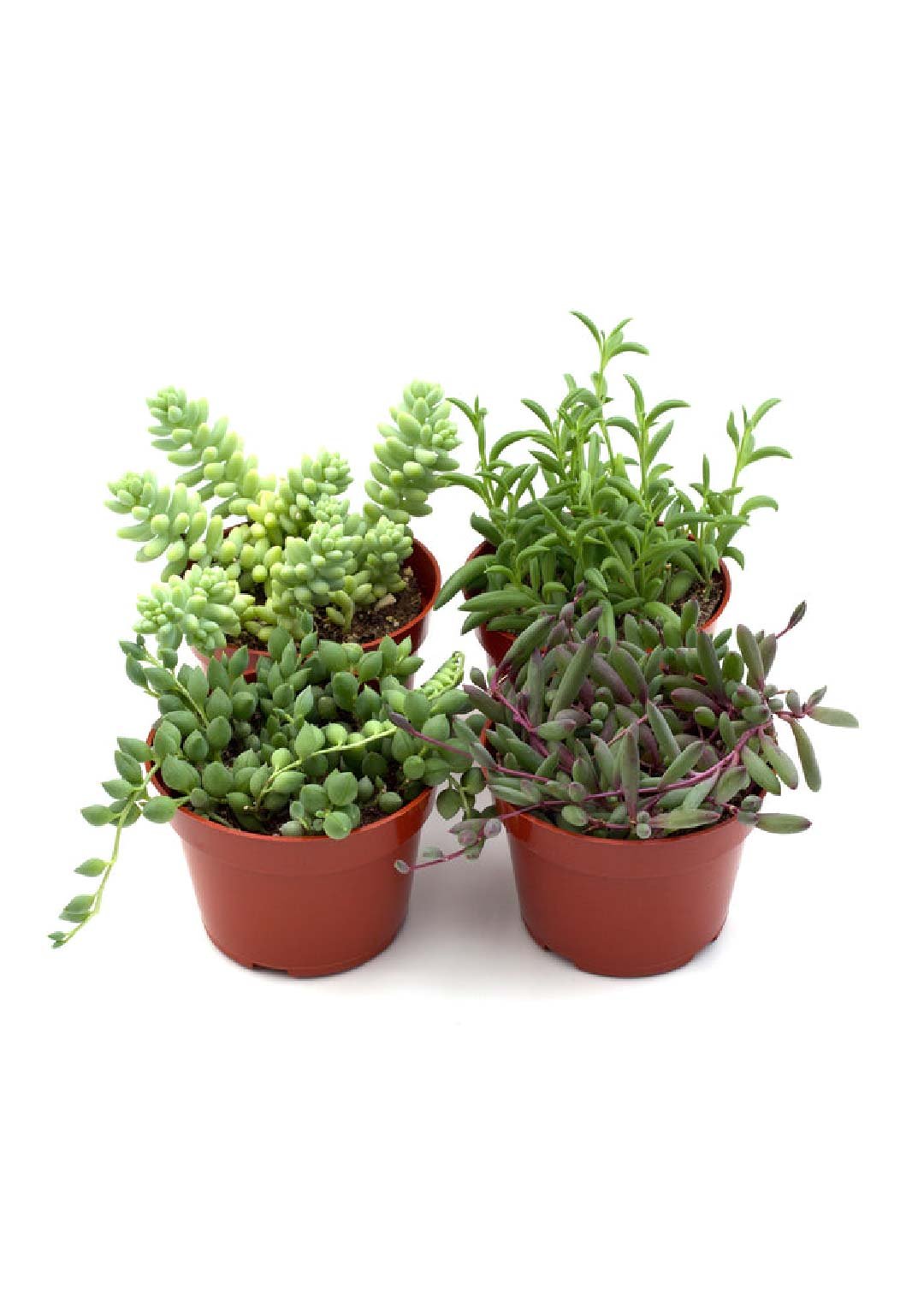
Trailing Succulent Collection — a beautiful selection of succulents that come ready to enhance your indoor or outdoor space. These packs feature an assortment of plants, each thriving in its 4-inch round pot, showcasing a mix of colors, heights, and textures.
Perfect for various uses, including centerpieces, and designs, or as a tranquil garden addition, these succulents arrive meticulously packaged for protection during transit. Ideal for gifting to nature enthusiasts, these plants may differ slightly from the photos based on season and availability.
Upon arrival, a bit of water and a light brushing to remove any soil from the leaves will help these succulents settle into their new home. Elevate your space with the natural charm of these succulent varieties, carefully chosen to bring a touch of greenery to your surroundings.
Please note, that while we strive to match the photos, the variety of species may vary depending on the season and their readiness.
Botanical Classification: Echeveria
Common Name: Rosettes
CARE GUIDE:
Light. Indirect light to bright light — While it flourishes in direct sunlight, it won't tolerate a permanent placement away from a window. Aim for at least 4-6 hours of sunshine for optimal growth.
Water. careful of overwatering— this plant can go up to 3-4 weeks without water. When you water, make sure to water deeply and allow the soil to dry out.
Humidity. No humidity needed
Toxicity. Toxic and not pet-friendly.
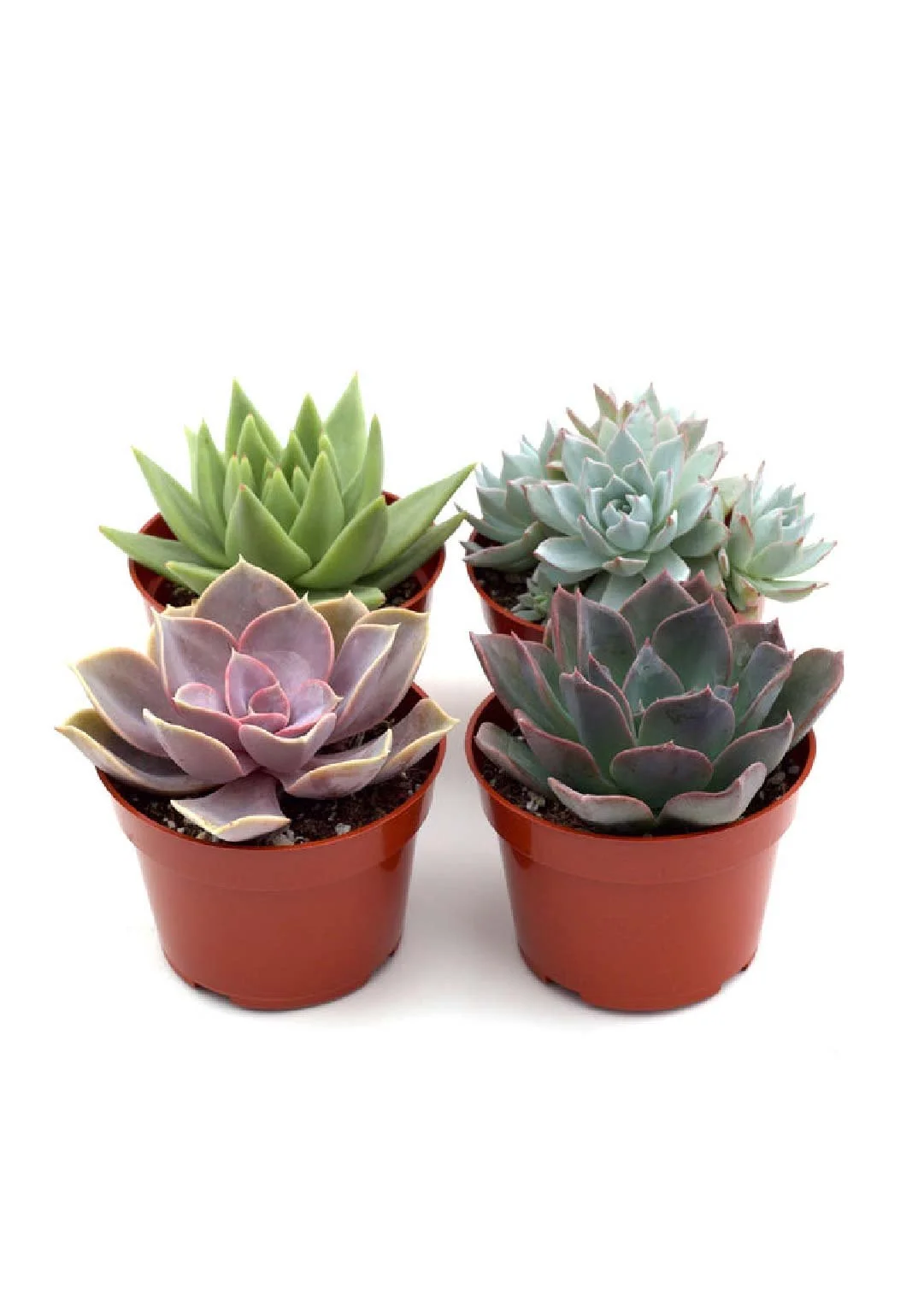
Rosette Succulent Collection — a beautiful selection of succulents that come ready to enhance your indoor or outdoor space. These packs feature an assortment of plants, each thriving in its own 4-inch round pot, showcasing a mix of colors, heights, and textures.
Perfect for various uses, including centerpieces, and designs, or as a tranquil garden addition, these succulents arrive meticulously packaged for protection during transit. Ideal for gifting to nature enthusiasts, these plants may differ slightly from the photos based on season and availability.
Upon arrival, a bit of water and a light brushing to remove any soil from the leaves will help these succulents settle into their new home. Elevate your space with the natural charm of these succulent varieties, carefully chosen to bring a touch of greenery to your surroundings.
Please note, that while we strive to match the photos, the variety of species may vary depending on the season and their readiness.
Botanical Classification: Echeveria
Common Name: Rosettes
CARE GUIDE:
Light. Indirect light to bright light — While it flourishes in direct sunlight, it won't tolerate a permanent placement away from a window. Aim for at least 4-6 hours of sunshine for optimal growth.
Water. careful of overwatering— this plant can go up to 3-4 weeks without water. When you water, make sure to water deeply and allow the soil to dry out.
Humidity. No humidity needed
Toxicity. Toxic and not pet-friendly.

Ficus Elastica 'Burgundy' Houseplant — a stunning specimen with deep, rich burgundy-colored leaves, adding a touch of elegance to any space. Thriving in bright indirect light and requiring moderate watering, it's an eye-catching yet low-maintenance addition to your indoor greenery collection.
Botanical Classification: Ficus elastica
Common Name: Rubber Plant, Rubber Tree, Rubber Fig
CARE GUIDE:
Light. This plant thrives in bright indirect light, welcoming morning or late afternoon direct sunlight while cautioning against harsh midday rays that can lead to leaf scorch. It's important to note that this plant doesn't fare well in low-light conditions.
Water. Hydrate when the soil is 50%-75% dry, ensuring a gradual watering process to allow absorption until it gently flows through the pot's drainage hole. Remember to discard any surplus water collected in the saucer to maintain optimal soil moisture levels.
Humidity. Your plant thrives in typical household humidity, it appreciates additional moisture from a pebble tray or a nearby humidifier.
Toxicity. Toxic to pets and humans.
Additional Care. Your plant is responsive to changes in its environment, particularly when relocating. If you need to shift your plant to a significantly different location, it's advisable to do so gradually to prevent sudden leaf drop. Exercise caution when pruning, as the plant may release a milky latex substance that is mildly toxic. In case of contact with the sap on your hands or skin, promptly wash with warm water and soap.

String of Pearls — Cascading like a living waterfall of pearls, this plant is a true testament to nature's artistry. With its delicate tendrils adorned with round, bead-like leaves, our String of Pearls is a captivating choice for both novice and experienced plant enthusiasts.
Botanical Classification: Senecio rowleyanus
Common Name: String of Pearls
CARE GUIDE:
Light. Indirect light to bright light — While it flourishes in direct sunlight, it won't tolerate a permanent placement away from a window. Aim for at least 4-6 hours of sunshine for optimal growth.
Water. careful of overwatering— this plant can go up to 3-4 weeks without water. When you water, make sure to water deeply and allow the soil to dry out.
Humidity. No humidity needed
Toxicity. Toxic and not pet-friendly.

Ficus Lyrata 'Fiddle Leaf Fig' Houseplant — The Ficus Lyrata 'Fiddle Leaf Fig' Houseplant is characterized by its large, glossy, violin-shaped leaves, creating a bold and stylish statement in any room. Renowned for its easy care, this plant prefers bright, indirect light and infrequent watering, making it an ideal choice for both seasoned plant enthusiasts and beginners.
Botanical Classification: Ficus lyrata
Common Name: Fiddle-leaf Fig
CARE GUIDE:
Light. Place your fiddle leaf fig in bright indirect light to ensure optimal growth. Avoid low-light conditions, as they can lead to yellowing and dropping of leaves. Positioning the plant near an eastern window or gradually acclimating it to direct sunlight from a southern window is considered ideal.
Water. Water when 50-75% of the soil volume is dry. Always water thoroughly until it flows out of the drainage hole to encourage a healthy root system. Discard any excess water in the saucer.
Humidity. Your plant thrives in typical household humidity, it appreciates additional moisture from a pebble tray or a nearby humidifier.
Toxicity. Toxic to pets and humans.
Additional Care. Exercise caution when pruning your plant, as it may release a mildly toxic milky latex substance where cuts occur. If the sap comes into contact with your hands or skin, promptly wash with warm water and soap.
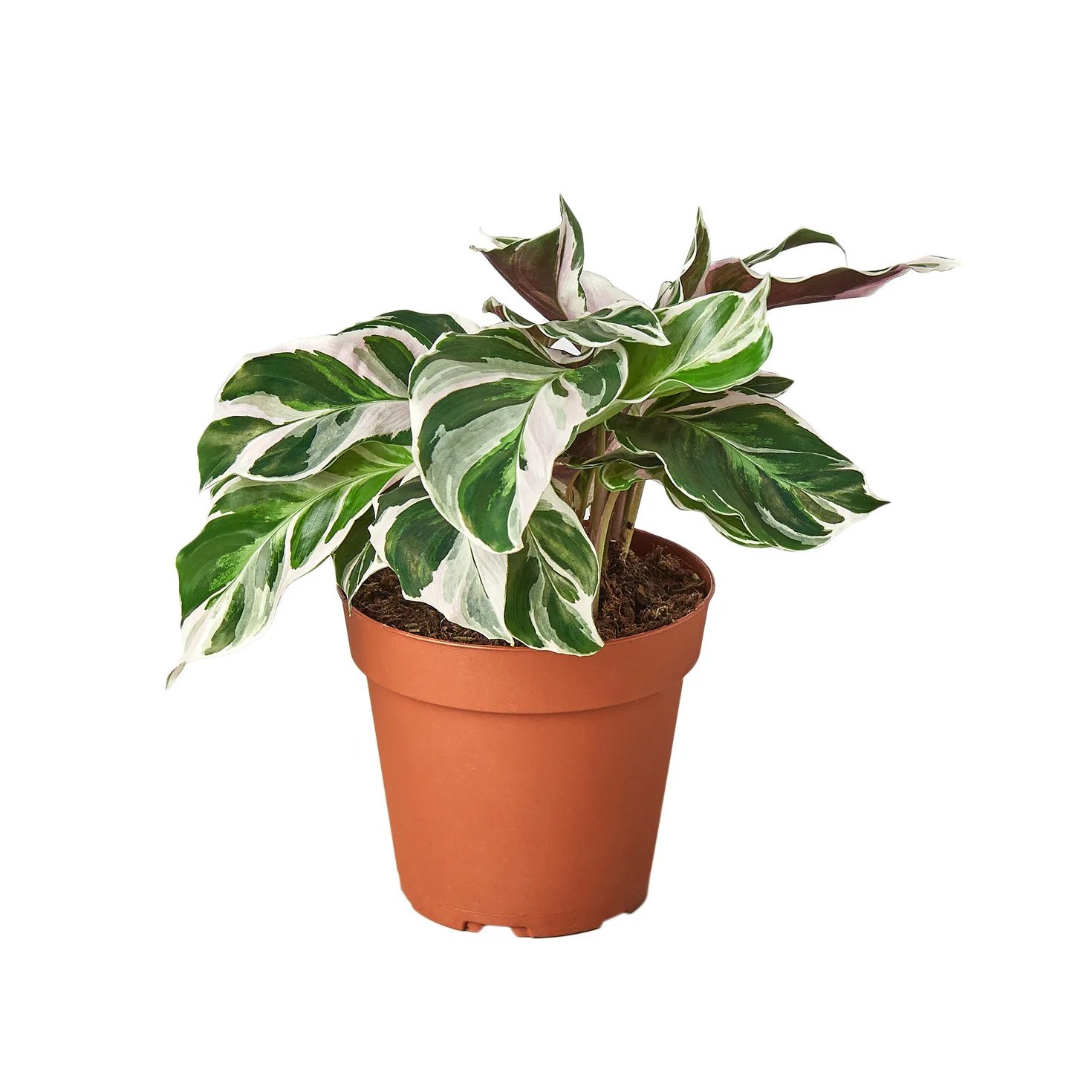
Calathea 'White Fusion' Houseplant — renowned for their striking, boldly patterned foliage. In a fascinating natural display, the leaves of most Calathea varieties gently fold up during the night, unveiling the often vibrant and colorful undersides of their remarkable leaves.
Botanical Classification: Calathea lietzei
Common Name: Calathea White Fusion, Peacock Plant
CARE GUIDE:
Light. Medium to bright indirect light. Never allow this plant to receive direct sunlight, as the leaves will burn.
Water. Water as needed, allowing the soil to dry out in between waterings. Never let your plant sit in water as it will cause root rot. If leaves’ edges begin to burn or curl slightly, that might possibly mean the water you are using to water the plant has too much chlorine in it. An easy fix for that is to let your water sit out overnight for the chlorine to naturally evaporate.
Humidity. Loves its leaves misted. Mist the leaves to increase humidity around your plant, especially in the drier winter months. Misting can also help remove dust & clean the plant’s glossy leaves.
Toxicity. Non-toxic and pet-friendly.
Step 2: Send Us Your Information Request
Once completed, you will be contacted by email by one of our event plant rental team members.
Questions? Skip the form and contact Megan Cain, Plant Rental Lead, at hello@theZenSucculent.com.
Thanks for choosing The ZEN Succulent!
The ZZ Plant (Zamioculcas zamiifolia) is a no-fuss houseplant with deep green, glossy leaves that add an effortlessly cool vibe to any space. Whether you’re a seasoned plant lover or just getting started, this beauty thrives on neglect, making it one of the easiest plants to care for.
Botanical Classification:
Botanical Name: Zamioculcas zamiifolia
Common Name: ZZ Plant, Zanzibar Gem
CARE GUIDE:
Light. The ZZ Plant adapts to various lighting conditions, from low light to bright, indirect sun. While it can tolerate dim spaces, it grows best with a bit more light.
Water. Less is more—water only when the soil is completely dry, about every 2-3 weeks. Overwatering is the most common issue, so err on the side of dry.
Humidity. This plant is completely unfussy and thrives in average indoor humidity. No misting needed.
Toxicity. Mildly toxic if ingested, so keep out of reach of pets and small children.
Additional Care. The ZZ Plant grows from underground rhizomes, making it easy to propagate. To create a new plant, separate a mature stem with its root system and plant it in fresh soil.
A striking, sculptural addition to any home, the ZZ Plant brings effortless greenery with minimal effort.